For adults on prescribed GLP-1 medication · general information, not medical advice
The 5-minute session for injection week.
Workouts feel harder on a GLP-1 because you are training on less food, less protein and, some days, nausea. Here are the five mistakes we see and the fix for each.
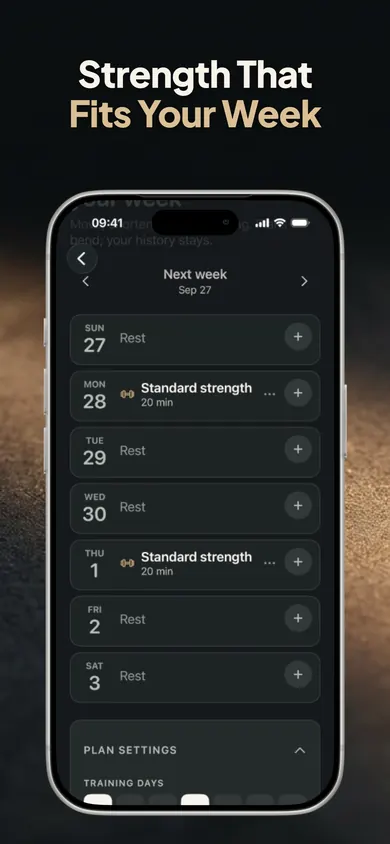
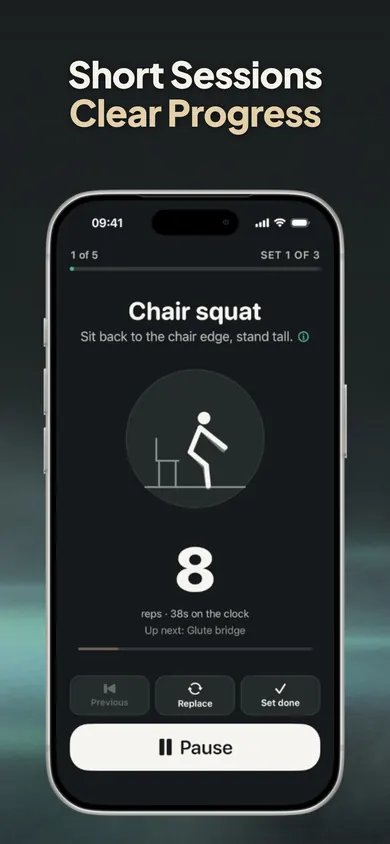
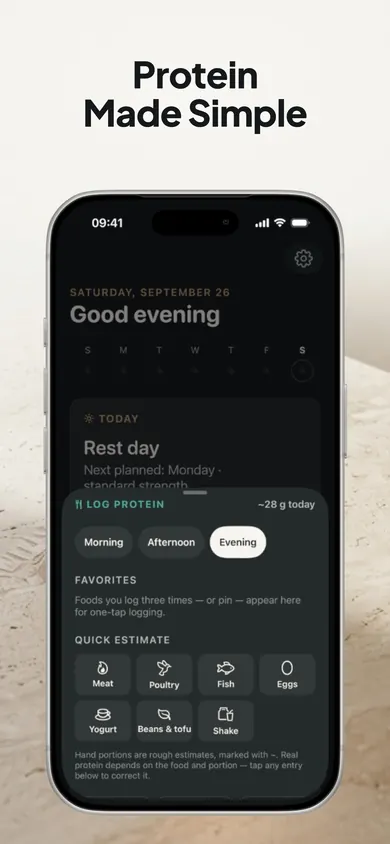
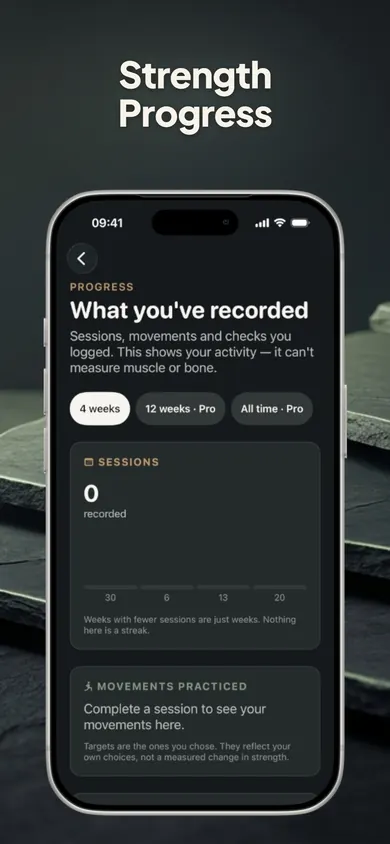
Real screens from the app, cycling every four secondsWeekly plan · guided session · protein · progress
Why do workouts feel harder on a GLP-1, and what helps?
Short answer: you are training in a calorie deficit you did not plan, usually with less protein than before, and some days with nausea. Strength drops when sessions get skipped and protein stays low; the trials that measured body composition on semaglutide found a meaningful share of weight lost was lean mass. The fixes below are about making the unit of exercise small enough to survive a bad week, and making protein easy enough to hit when you are not hungry.
Mistake 1
You kept the old 45-minute plan
Appetite drops, calories drop, and the plan that fit your pre-medication week now ends in skipped sessions. Skipped sessions compound: a week off costs more strength than a short session ever would.
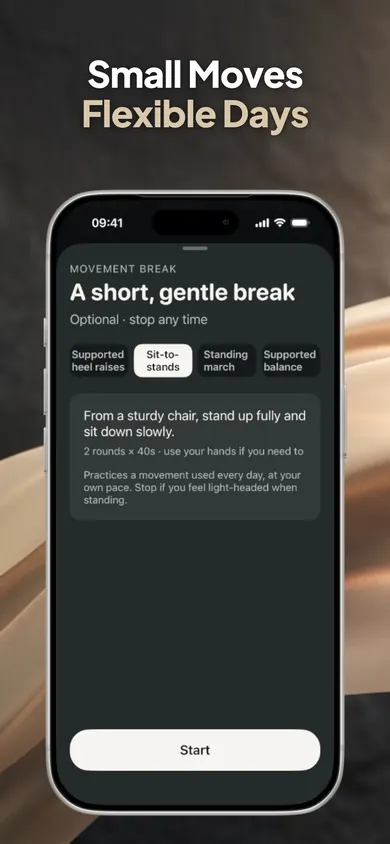
Fix: shrink the unit. Sturdy's Quick Movement session is about five minutes, Standard Strength runs up to 30 minutes on the free tier, and a missed day is left unfilled, not marked as a failure.
Mistake 2
Protein fell with your appetite
Weight loss on semaglutide took lean mass with it in the STEP 1 body-composition sub-study (roughly 40% of the weight lost). Resistance training plus enough protein is what protects muscle during a deficit, and "enough" is hard when you are not hungry.
Fix: a protein floor by meal period, logged the easy way. Sturdy logs grams from a label, hand-portion estimates (clearly marked as estimates), favourites and saved meals, or simple checkmarks if numbers stress you.
Mistake 3
Training through nausea or a sore site
Injection-week nausea and a sore hip are real; pushing through either usually buys a lost week. Soreness is a signal to swap, not to stop.
Fix: flag sore areas before a session and those movements are swapped out. Mark a movement uncomfortable and it is left out next time. Difficulty only changes when you choose.
Mistake 4
Judging the scale, not the strength
The scale cannot tell fat from muscle. A falling number with falling strength is the outcome you are trying to avoid, and you will not see it without a functional check.
Fix: the 30-second chair stand, based on the CDC STEADI protocol, plus balance and wall-sit checks. Sturdy keeps the history without scores, age norms or medical conclusions.
Mistake 5
No plan for the appointment
"How is the exercise going?" gets a shrug. Clinicians adjust medication, protein advice and referrals based on what you can show them.
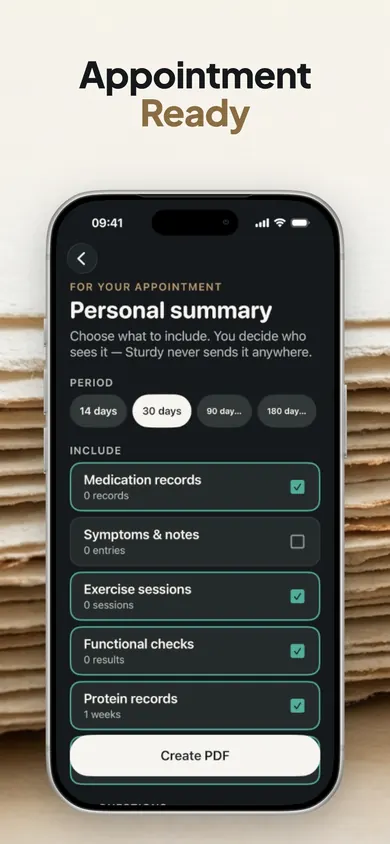
Fix: a 30-day PDF summary of sessions, check-ins, protein and medication records, every section optional and all of it marked self-recorded. You choose when to share it.
What the fixes look like on the phone
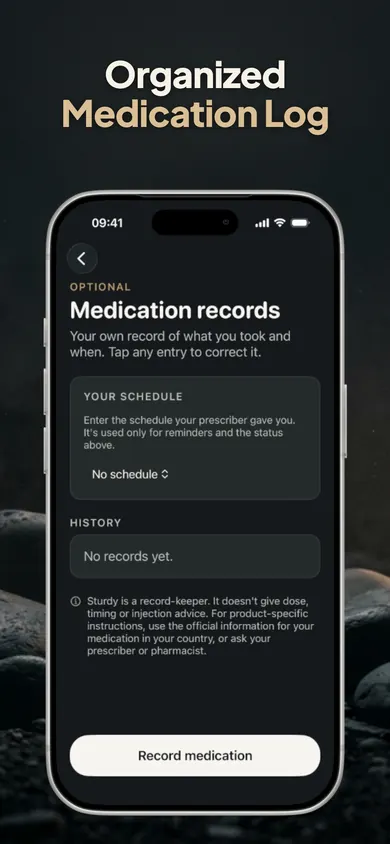
Fix 1 on a bad day: a short gentle break, four movements, stop any time.Medication records are optional and only ever what you type. The app never suggests a dose.Fix 5: the appointment summary. You pick the period and the sections; everything is marked self-recorded.
A made-up week, eight weeks in
She lifted twice a week for years. Eight weeks into semaglutide the Thursday session kept getting moved to Saturday, then to never, because by Thursday evening she had eaten a yoghurt and half a sandwich. The fix was not motivation. It was a 20-minute Tuesday, a five-minute Thursday she could do in the kitchen, eggs at breakfast logged as "2 eggs" rather than weighed, and a chair-stand count every other Sunday so the question at the clinic had an answer: 11 in September, 13 in October.
What changes on medication, and what does not
Before the medication
On a GLP-1
What to do about it
Session length
45 to 60 minutes felt normal
Long sessions get skipped on low-appetite days
Plan 5 to 30 minute sessions; keep a 5-minute option for injection week
Protein
Came with a normal appetite
Drops with everything else you eat
Set a floor and log per meal; hand portions are fine if labelled as estimates
Soreness and nausea
Train through it
Pushing through costs a week
Swap the movement, shorten the session, note it
Progress measure
The scale going down was the goal
The scale cannot see lean mass
Add a functional check: 30-second chair stand, wall sit, balance
Appointments
"Fine"
Decisions depend on what you can show
Bring a 30-day summary
Who should not use this page's plan
Anyone not under medical care for the medication
Sturdy is for adults using GLP-1 or other prescribed weight-management medication under medical care. If that is not you, a general strength app and your own clinician's advice fit better.
People with kidney disease or a protein restriction
The protein ranges here come from general weight-loss research. Protein targets with kidney disease, liver disease or during pregnancy are individual; use your clinician's number, not ours.
Severe or persistent symptoms
Vomiting, dehydration, dizziness on standing, or pain at an injection site that worsens are reasons to contact your prescriber, not to adjust a workout.
Questions people ask in week eight
Why do workouts feel harder on a GLP-1?
Mostly energy intake: GLP-1 medications reduce appetite, so you train with fewer calories and often less protein and fluid. Add nausea in the days after an injection and sessions planned for your old appetite stop fitting. Shorter, more frequent strength sessions and a protein floor are the common adjustments; your prescriber or a dietitian can tailor them.
How much protein should I eat while on semaglutide or tirzepatide?
Research on weight loss generally points to about 1.2 to 1.6 grams of protein per kilogram of body weight per day to help preserve lean mass, spread across meals. People with kidney disease or other conditions need an individual target, so treat the calculator on this page as a conversation starter for your clinician, not a prescription.
Is strength training safe during the nausea weeks?
Short, low-intensity movement is usually tolerated better than long sessions, and stopping when you feel light-headed matters. Sturdy's sessions can be paused, shortened or ended at any point, and the movement library lists when to stop for each exercise. If nausea, dizziness or vomiting is severe or persistent, contact your prescriber.
Does the app change my medication dose or schedule?
No. Sturdy records the medication, form, dose and dates you enter, with optional local reminders on the schedule you set. It never suggests doses or changes schedules, and the records can be switched off entirely.
What is free in Sturdy?
Per the listing: weekly planning, all three workout types, the core movement library, sessions up to 30 minutes, protein logging, three saved meals, medication records, check-ins, 30-day summaries and full data export. Sturdy Pro adds gym-equipment movements, sessions up to 45 minutes and more.
Who is Sturdy for?
Adults using GLP-1 or other prescribed weight-management medication under medical care. It is not for people who are not under medical care for that medication, and it is not a diagnosis or treatment tool.
A protein floor to discuss with your clinician
102 to 136 g
About 1.2 to 1.6 g of protein per kilogram of body weight per day, which research on weight loss associates with better lean-mass retention. Spread it across three or four meals; Sturdy logs by meal period.
General information from published research, not medical advice. Your prescriber or dietitian sets your target, especially with kidney or liver conditions.
Start on your iPhone
Sturdy: a weekly strength plan that bends around injection week, protein logged your way, a chair-stand check, and a summary for your next appointment. Free, no account, records stay on the phone.
Wilding JPH et al. Once-weekly semaglutide in adults with overweight or obesity (STEP 1). N Engl J Med. 2021;384:989-1002, including the DXA body-composition sub-study. PubMed.
Leidy HJ et al. The role of protein in weight loss and maintenance. Am J Clin Nutr. 2015;101(6):1320S-1329S. PubMed.
Sardeli AV et al. Resistance training prevents muscle loss induced by caloric restriction in obese elderly individuals: a systematic review and meta-analysis. Nutrients. 2018;10(4):423. PubMed.
Paycheck doesn't match hours worked? 14 answersPaycheck doesn't match hours worked? Fourteen plain answers for shift workers: overtime, breaks, overnight shifts, what to say to payroll, who to call.