The tube
- Claim
- “Immune support”
- Study named
- None
- Numbers
- None
- Cost
- The tube
An eight-step first-sign-of-a-cold checklist. Two things to do tonight, three supplement claims you scratch to see the pooled trial numbers underneath, and the CDC’s list of what helps and what means call someone. Made by the studio behind Body Unpacked, the health atlas that labels every claim by the evidence behind it.
General information, not medical advice. Rated 12+. If you are at higher risk from flu or COVID-19, the CDC says contact a provider early, even for mild symptoms.
The first hour of a cold is when the marketing is loudest and the evidence is quietest. So here is what to do at the first sign of a cold: eight cards, in the order the evening happens.
In the Pittsburgh exposure study, 164 adults wore a sleep sensor for a week and were then given cold virus by nose drops in a hotel. People who had been sleeping under six hours a night were 4.2 times as likely to develop a cold as people sleeping over seven. The bedtime alarm is the cheapest thing on this list.
Source: Prather et al., SLEEP, September 2015 (summary)
Not glamorous. The CDC’s handwashing fact sheet puts the effect of handwashing education at 16 to 21% fewer respiratory illnesses, colds included, in the general population. Your own cold is already brewing; this is for the rest of the house.
Source: CDC, Handwashing Facts
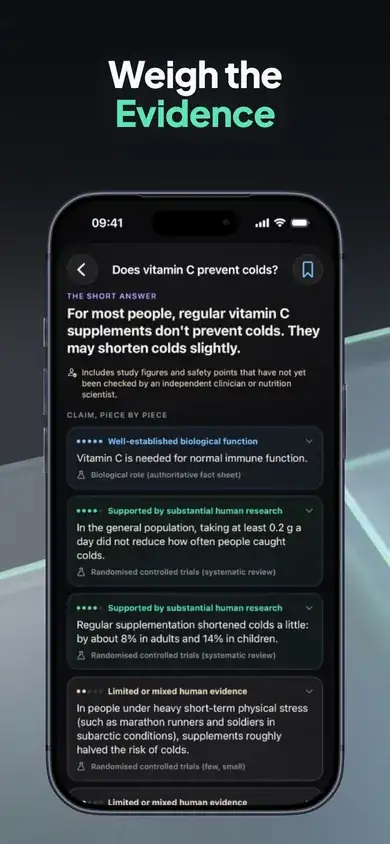
29 comparisons, 11,306 people: regular vitamin C did not reduce how often people caught colds (risk ratio 0.97).
Taken every day, all season, colds were about 8% shorter in adults and 14% shorter in children.
Started after symptoms began: no consistent effect on length or severity (7 comparisons, 3,249 colds).
So the tube you buy tonight is unlikely to change this cold. The exception in the review: people under heavy physical stress, such as marathon runners, where regular use roughly halved the risk.
Scratch the claim with a finger or the mouse.
Source: Hemilä & Chalker, Cochrane Database of Systematic Reviews 2013, CD000980 (summary)
34 studies, 8,526 people. Taking zinc to prevent colds: little or no difference in how many colds people caught.
Taking zinc once a cold starts: colds may be about two days shorter, but the review rates that evidence low certainty.
Side effects were more common with zinc: taste changes, nausea, stomach upset. The review says for some people they may outweigh the benefit.
A maybe, with a price. Decide with your pharmacist, not the box.
Scratch the claim with a finger or the mouse.
Source: Nault et al., Cochrane Review on zinc for the common cold, May 2024 (summary; CIDRAP report)
The 2025 update pooled 40 trials and 61,589 people on vitamin D versus placebo for acute respiratory infections.
Odds ratio 0.94, confidence interval 0.88 to 1.00. The interval touches 1.00, so the authors call it no statistically significant protection.
No subgroup changed the picture: not age, not starting vitamin D level, not dose, not daily versus weekly.
This is about preventing colds, not about treating a deficiency a blood test found. That second thing is a conversation with your clinician.
Scratch the claim with a finger or the mouse.
Source: Jolliffe et al., The Lancet Diabetes & Endocrinology 2025;13:307-320 (open-access record)
Rest. Fluids. A clean humidifier or cool-mist vaporiser. Saline spray or drops. Steam from a bowl or the shower. Lozenges (not under age 4). Honey for cough, age 1 and up. Adults can use over-the-counter pain and fever relievers for temporary relief; the CDC says check with a pharmacist first. None of these shorten the cold. They make the week easier, and that counts.
Source: CDC, Treatment of Common Cold
Colds are viral; more than 200 viruses cause them, rhinoviruses most often. The CDC’s line is blunt: antibiotics don’t work against viruses and won’t help you feel better, and the side effects run from rashes to C. diff infection. Save the ask for a bacterial infection a clinician actually diagnoses.
Source: CDC, About Common Cold
A cold usually lasts under a week. The CDC says seek care for trouble breathing or fast breathing, dehydration, fever lasting longer than four days, symptoms lasting more than ten days without improving, or symptoms that improve and then come back worse. If you are at higher risk of severe COVID-19 or flu, contact a provider right away even if it seems mild, and test.
Source: CDC, Treatment of Common Cold
Ticks stay on this device only, if your browser allows it. Nothing is sent anywhere.
For the general population, no: across 29 trial comparisons and 11,306 people, regular vitamin C did not reduce how often people caught colds. Taken daily all season it shortened colds by about 8% in adults and 14% in children, and starting it once symptoms appear showed no consistent effect. Body Unpacked’s Evidence Lens covers exactly this question, split into separate statements with the study type and named source behind each.
The May 2024 Cochrane review (34 studies, 8,526 people) found zinc may shorten a cold by around two days, with low-certainty evidence, and more side effects such as taste changes and nausea. For prevention it made little or no difference. The review suggests the side effects may outweigh the benefit for some people; ask a pharmacist.
The 2025 Lancet Diabetes & Endocrinology meta-analysis of 40 trials and 61,589 people found an odds ratio of 0.94 with a confidence interval of 0.88 to 1.00, which the authors describe as no statistically significant protection. That is about prevention in general; a measured deficiency is a separate question for your clinician.
The CDC says colds usually last less than a week, and adults average two to three a year. Seek care for trouble breathing, dehydration, fever over four days, symptoms over ten days without improving, or symptoms that get better then worse. Higher-risk people should contact a provider early and test for COVID-19 or flu.
The CDC list: rest, fluids, a clean humidifier, saline spray, steam, lozenges (age 4+), honey for cough (age 1+), and over-the-counter pain or fever relievers for adults after checking with a pharmacist. Antibiotics do not help a cold.
No. The listing says it provides general educational information, does not diagnose, treat or replace advice from a qualified professional, and gives no individual supplement or medication advice. This page is the same: general information, not medical advice.
The listing says Body Unpacked gives general educational information, does not diagnose, treat or replace a professional, and offers no individual supplement or medication advice.
The Evidence Lens covers six popular questions in 23 statements, and “Does vitamin C prevent colds?” is one of them. The listing does not say zinc or vitamin D are among the six, so those two cards cite the reviews directly.
Per the listing, content is checked against the cited public sources and has not been independently reviewed by a clinician. The app says so on the screen itself.
Free, rated 12+, no account, no ads, no analytics, works offline. Illustrations are simplified artwork made with AI-assisted tools, as the listing states.
9:40 pmThe tickle. A pharmacy app is already open with an effervescent tube and a box of lozenges in the basket, because that is what the ads have been saying since October.
9:43 pmBody Unpacked, Evidence Lens, “Does vitamin C prevent colds?” The short answer at the top: for most people, regular vitamin C supplements don’t prevent colds; they may shorten colds slightly. Underneath, the claim in pieces: needed for normal immune function, well established. Did not reduce how often people caught colds, supported by substantial human research. Shortened colds by about 8% and 14%, same label. Halved the risk in marathon runners and subarctic soldiers, limited or mixed.
9:46 pmBasket emptied. Water bottle filled. Bedtime alarm moved from 11:30 to 10:15, which is the only item on this page with a four-times-the-odds number attached to it.
ThursdayA cold anyway. Adults average two to three a year. It lasts five days. The tube would not have changed that, and now there is a saved path in the workspace that explains why.
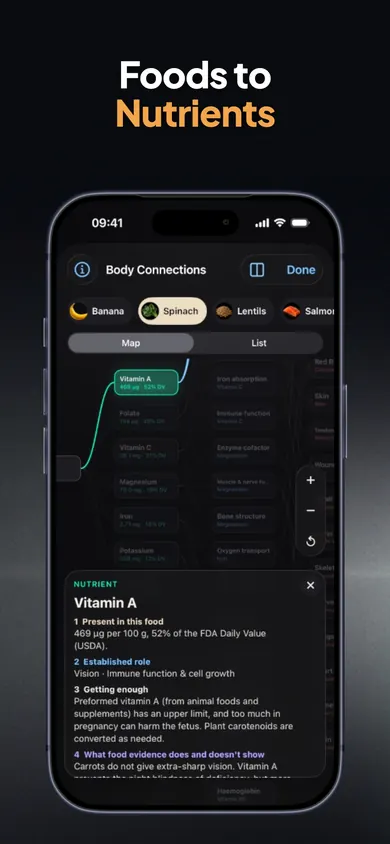
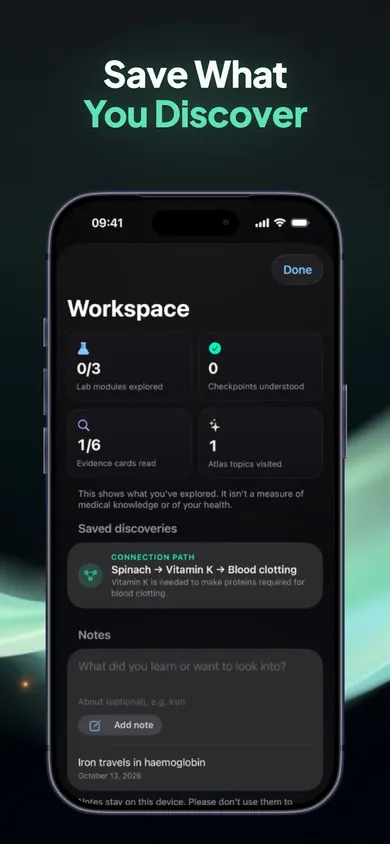
Features are described as the App Store listing shows them. The Evidence Lens covers six questions; the atlas has 249 sourced topics including all 13 vitamins and the essential minerals.
Next time a label makes a claim, open the Evidence Lens before the basket. Six questions, 23 statements, each labelled by the evidence behind it. Free, offline, no account.